When the leaks keep coming back, patching stops making sense. We replace failing water lines and repipe whole houses, then show you what came out.
Repiping in Wake Forest, NC means replacing the water piping in a house instead of fixing it one leak at a time. Sometimes that is the buried line from the meter to the front wall. Sometimes it is every supply line inside the walls, attic or crawl space. They are different jobs, and knowing which one you need is most of the decision.
The calls tend to sound the same. A pinhole leak got fixed in March and another one opened up in June, three feet away. The water comes out tinted at more than one tap. Pressure dropped in the whole house, not just the shower. None of that is one bad fitting. That is piping reaching the end of its life.
Our shop sits on Park Avenue in Youngsville, about fifteen minutes up US 1 from downtown Wake Forest, so we work Wake Forest, Rolesville and Franklinton daily. If a line has already burst and you cannot get it shut off, call the emergency line at (919) 316-0025 first and read this later.
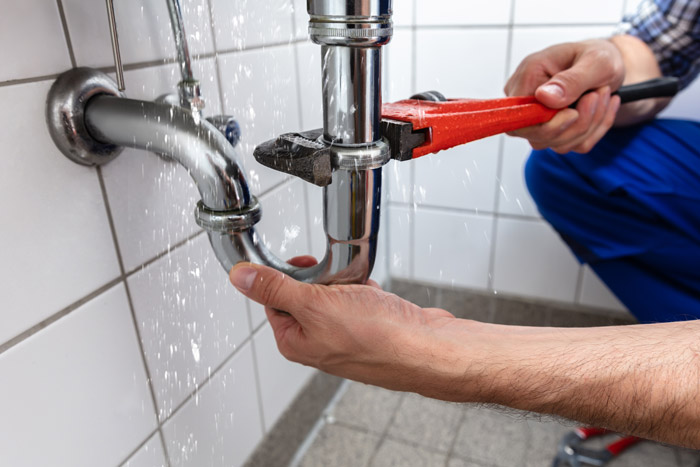
One leak is one leak. A pattern is the thing to watch for, and these are the patterns we see most around Wake Forest.
The first one is bad luck. The third one, in a different room, is the pipe telling you the rest of the run is the same age and the same condition. If you are still chasing where the water is coming from, start with leak detection.
Brown or orange water at first draw, especially on the hot side, often points to corrosion inside steel piping. If it shows up at several taps instead of one, the pipe is the source, not the fixture.
One weak fixture is a fixture problem. Weak flow everywhere, getting slowly worse over years, usually means the inside diameter of the pipe has narrowed with scale and corrosion.
Homes of a certain age were plumbed in materials that are no longer installed. Where we find galvanized steel or polybutylene still in service, replacement is usually the honest recommendation rather than another patch.
A soft strip of lawn that stays green through August usually sits over a leaking service line. Triangle red clay holds the water underground, so the yard hides it well.
Winter snaps here are short but sharp, and an exposed run in a crawl space or an exterior wall is where they do damage. A split line is an emergency call first and a repipe conversation second.
One leak is usually a repair. We will say so. A single pinhole in otherwise sound copper gets a coupling, not a repipe quote. Replacement earns its cost when the failures repeat, when the water quality has changed, or when the material itself is the problem. The EPA puts household leaks at nearly one trillion gallons wasted nationally each year, and plenty of that is small stuff that never needs new pipe.
Water line replacement and a whole house repipe get used interchangeably on the phone. They are separate pieces of the system, and a house can need one, the other, or both.
The buried run from the town meter, or from the well, to where the water enters the house. That single line is what people mean by main water line replacement.
The symptoms are outdoor ones: a wet patch in the yard, a bill that climbed with nothing changing, or pressure that dropped at every tap at once.
Everything past that entry point. The lines that run through walls, the attic or the crawl space to feed each sink, shower, toilet, washer and water heater.
This is the piece a whole house repipe replaces. Symptoms are indoor: repeat leaks, discolored water, weak flow at fixtures on one side of the house.
The meter answers it. We shut the main valve at the house and watch the meter. If it keeps turning with the house isolated, the loss is outside in the service line. If it stops, the problem is inside.
Wake Forest homes are generally on town water, while private wells are common once you head into Franklin County toward Youngsville and Franklinton. A well service line runs from the pump and pressure tank instead of a meter, so we test the tank and switch as part of the diagnosis. Our well pump services page covers that side.
This changes the work more than anything else. Older homes near downtown, off White Street and South Main Street, commonly sit over crawl spaces, which gives us a clear path to run new lines with little cutting.
Newer subdivisions off Rogers Road, Ligon Mill Road and Falls of Neuse Road are largely slab built. There we reroute overhead through the attic and down interior walls rather than break concrete, which is faster and cheaper than it sounds.
Four materials cover almost every Wake Forest house we walk into. Two of them are what goes back in.
Rigid metal tubing, joined with a fitting at every turn. It has been the standard for decades and is what many homeowners ask for by name. More joints means more labor than flexible pipe.
Flexible plastic tubing that bends around corners instead of needing an elbow. Fewer joints, fewer places to leak, and it can often be pulled through existing wall and attic cavities with less cutting than copper.
Zinc coated steel pipe found in older homes. It corrodes from the inside, so the flow narrows and the water can run rusty long before a leak appears. It is a material we replace rather than extend.
Grey or blue plastic pipe used in homes of a certain era and no longer installed. Where we find it still in service, we talk about replacement, because repairing into it does nothing for the rest of the run.
Copper and PEX are the two common replacements today. The choice comes down to the house, the routing, what the walls and attic will allow, and what you want to live with.
New pipe will not fix taste, hardness or sediment on its own. That is a separate system, and water filtration is where it gets handled.
The work is more orderly than most people picture. Here is the shape of it.
We find the meter, the main shutoff, the water heater and every fixture, then work out where the existing lines travel. The route decides the price, so this comes first.
Crawl space homes get new lines run underneath. Slab homes get lines rerouted through the attic and down interior walls. We mark every spot that has to be opened and show you the list before anything is cut.
We shut down and repipe a section at a time rather than the whole house at once. On most jobs water goes back on at the end of each working day, and bathrooms stay usable in between.
New pipe goes in, gets secured properly and is tied into each fixture, the water heater and the main. Old lines are cut out or capped off so nothing feeds them.
The new system is pressurized and held so every joint proves itself before walls close up. Then we flush the lines and check flow at every tap with you standing there.
Openings are squared off ready for patching, and we haul the old pipe out with us. Ask for the drywall patching and paint to be spelled out on the quote either way, so there is no surprise about who is doing it.
How long and how it is quoted. Most single family repipes run one to three working days. A service line replacement is often a single day. Pricing comes from the size of the house, the number of fixtures and bathrooms, the material, the routing, and whether we can get to the lines from a crawl space or have to go overhead. We look at the house, put the number in writing, and go over it before any work starts. A repipe is also the sensible moment to deal with an aging water heater in the same visit, since the connections are already open — see water heater services.
Repipe work runs through the same walls and crawl spaces as the wiring. We are licensed for both trades, so nothing stops while a second contractor gets scheduled.
A single leak gets a repair quote, not a repipe pitch. You get the smaller number when the smaller number is the right answer.
You are calling a shop on Park Avenue in Youngsville that covers Wake Forest, Rolesville, Franklinton, Louisburg, Zebulon, Knightdale and north Raleigh.
We repipe older homes near E. Carroll Joyner Park and newer slab builds out toward Falls Lake, and the method changes with the foundation.
We offer $50 off any plumbing repair, or 10% off for veterans and active duty military. Current details are on the specials page.
A burst pipe does not wait for business hours. The emergency line answers at (919) 316-0025.
White’s Plumbing & Electrical, LLC
730 Park Ave, Youngsville, NC 27596
Service and estimates: (919) 435-0736
24/7 emergency: (919) 316-0025
We cover Wake Forest daily, along with Youngsville, Rolesville, Franklinton, Louisburg, Zebulon, Knightdale and north Raleigh. Downtown Wake Forest is roughly a fifteen minute run down US 1 from the shop, and NC 98 and Forestville Road put the rest of town within easy reach.
Not sure which job you are looking at? The full plumbing services list is here.
One leak in one spot is almost always a repair. A repipe is the answer when the failures repeat, when several pinholes show up in different parts of the house, when the water runs rusty or discolored from more than one fixture, or when pressure has dropped everywhere at once. The pattern matters more than any single leak.
They are two different jobs that people often mix up. A water line replacement swaps the buried service line that runs from the meter or the well to the house. A whole house repipe replaces the distribution piping inside the house that feeds every fixture. A house can need one, the other, or both, so we test before we quote.
Copper and PEX are the two common choices today. Copper is rigid, long lived and joined with fittings at every turn. PEX is flexible, which means fewer joints and less opening of walls to route it. Older homes may still have galvanized steel or polybutylene, and those are the materials most often replaced rather than repaired.
Most single family repipes run one to three working days, depending on the size of the house, the number of bathrooms and how easy the runs are to reach. A crawl space is usually quicker than a slab, because the new lines have a clear path. Water is normally back on at the end of each working day.
Usually yes, though fewer than people expect. We route through attics and crawl spaces wherever the house allows and open drywall only at the points we have to reach. We mark every opening before we cut and walk you through the list first.
It depends on the size of the house, the number of fixtures, the material chosen and whether the lines run through a crawl space, an attic or under a slab. We look at the house, price the work in writing and go over it with you before anything starts. Call (919) 435-0736 to set up a visit.
It changes the method. Older homes near downtown Wake Forest often sit over crawl spaces, where new lines can be run underneath with little disruption. Newer subdivisions are commonly built on slab, so a repipe is often rerouted overhead through the attic and down interior walls instead of breaking concrete.
Tell us what the pipes have been doing and we will tell you whether it is a repair or a replacement.
White’s Plumbing & Electrical, LLC · 730 Park Ave, Youngsville, NC 27596 · 24/7 emergency (919) 316-0025