Underground, rough-in and trim-out on new homes — for the family building a custom house and for the builder who needs the crew there on the day the schedule says.
New construction plumbing in Wake Forest, NC is the whole water system of a house put in from nothing: the drain, waste and vent lines under the floor, the supply lines through the walls, the gas piping if the house burns gas, the water heater, and every fixture that finally hangs off all of it. It happens in three separate visits spread across months of building, and each one has to be inspected before the next trade covers it.
Two very different people read this page. One is building or buying a custom home and has never watched a house get plumbed before, and mostly wants to know what happens when and what they still get to decide. The other is a builder or general contractor who already knows all of that and cares about one thing: does the crew turn up on the scheduled day and leave the work ready for the inspector.
We do both. Our shop is on Park Avenue in Youngsville, about fifteen minutes up US 1 from downtown Wake Forest, and White’s is a member of the Franklin County Home Builders Association. If the house is already framed and you are trying to catch up a schedule, call (919) 435-0736 rather than reading the rest of this.
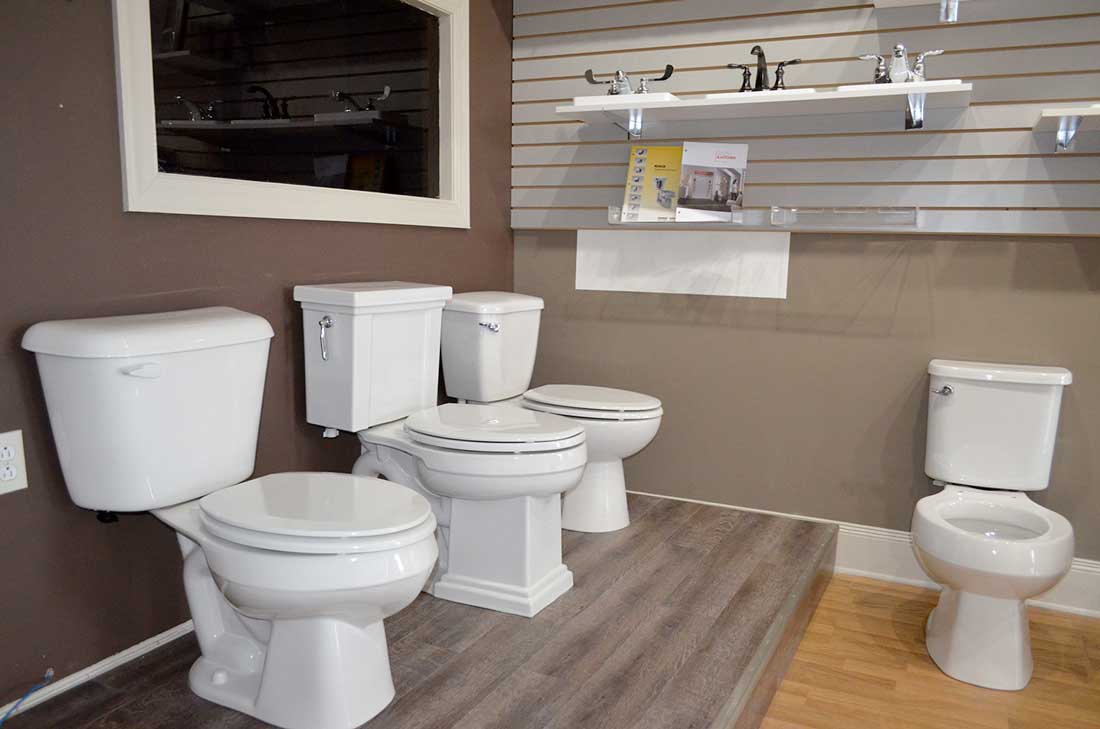
Toilet options for a new build. Fixture choices get made long before they get installed.
This is the part first-time custom-home buyers most often have not been told, and it explains nearly every question that comes up later. Plumbing is not one job done once. It is three jobs done months apart, and the order is set by the rest of the build.
Everything that ends up beneath the floor goes in first: the drain, waste and vent lines, the sewer or septic run leaving the house, and the water line coming in. On a slab house that work sits in gravel and dirt and gets buried by the pour, which is exactly why it is inspected first. On a crawl space house the same lines are hung underneath, where they stay reachable for the life of the home.
This stage decides where the bathrooms are, permanently. A shower drain three feet from where you wanted it is a drawing change today and a concrete saw in two years. The line that carries the whole house out to the street is set here too, and if it ever gives trouble decades later that is a sewer line repair, not a plumbing repair.
Also called the rough-in, and it is the biggest visit. With the walls open we run the supply lines to every fixture, stand the drains and vents up through the studs and out the roof, set the tub, run gas piping if the house has gas, and pipe in the water heater location. Nothing is finished-looking and nothing is turned on.
The system gets pressure tested and held while it is still open so every joint proves itself in front of an inspector, and then the drywall goes up. Everything you want inside a wall has to be in the wall now.
The last visit. Toilets, sinks, faucets, tub and shower valves, the disposal, the water heater and the outside hose bibs all get set and connected, then the water goes on and the whole house is tested fixture by fixture.
This is the stage homeowners actually see, which is why it feels like the plumbing happened at the end. Almost all of it was decided at stage one.
Final inspection, water on, and a walk through of where the main shutoff is, where the water heater lives and how to isolate a fixture. Most people find that out at 11pm during their first leak. It takes five minutes on handover day.
After that it is ordinary plumbing, and we are fifteen minutes away with a 24/7 line at (919) 316-0025.
Building something other than a house? A restaurant, office, retail space or shell fit-out runs on different fixture counts, grease handling and code requirements, and it has its own page — see commercial plumbing in Wake Forest.
Inspections are the reason the stages cannot be compressed. An inspector has to see the work before anything covers it, and the schedule bends around that, not the other way round.
The under-slab or crawl space drain, waste and vent work is inspected before concrete is poured or the crawl is closed in. It is usually held under test so the inspector can see the lines are sound and not just present.
Miss this and the fix is breaking what was just poured, which is why nobody is in a hurry to pour early.
After top-out and before drywall. Supply lines, drains, vents and gas piping are all visible and under test. The inspector is looking at how it was run and secured as much as whether it holds.
After trim-out, with fixtures set and water on. This is the one that clears the plumbing for the certificate of occupancy, so it tends to be the one everybody is waiting on at the end of a build.
On a builder job the general contractor normally pulls the permits and calls the inspections in, and we work to that schedule. On an owner-built house that job usually lands on you or on whoever is acting as the general contractor.
Either way we will tell you plainly what has to be inspected at each stage, because the expensive mistake is covering work up before it has been seen.
A lot near Rolesville or inside Wake Forest town limits is on municipal water and sewer. Push north toward Youngsville and Franklinton and you are often on a well and a septic system instead, which adds its own approvals and its own contractors to the schedule.
Worth knowing which one your lot is before you price the house, because the two builds are not the same build.
Almost everything on this list costs very little while the walls are open and turns into a real project once the house is finished. If you are going to think hard about one page on this site before your build, think hard about this one.
Decide before the walls close. A tankless unit changes the gas line sizing and the venting, and both of those are cheap to run now and awkward to add later. See tankless water heater installation, or talk it through against a tank on our water heater services page.
A stub for a future outdoor kitchen, a rough-in for the bathroom that goes in the bonus room later, a hose bib on the far side of the house, a line to the garage. Run while the trench is open, these cost a fraction of what they cost once there is a lawn and a driveway over them.
Copper and PEX are what goes into new homes now, and the choice interacts with how the lines are routed through the frame. It also sets what a future repair looks like, because the house you are building today is somebody’s repiping conversation in thirty years.
Well water around Franklin County carries iron and hardness, and treatment wants a place to live with power and a drain near the entry point. Designing that in beats bolting it onto a finished utility room. Details on water filtration.
Heavy Triangle summer storms put water into crawl spaces, and a pit and discharge line are far easier to install while the crawl is open and empty. If the lot sits low or the grading drains toward the house, price a sump pump now rather than after the first wet spring.
A main shutoff behind a finished wall, or a water heater with no valve within reach, is a decision made in a rush at rough-in that somebody regrets during a leak. Ask where the shutoffs are going while they can still be moved.
One more that costs nothing. Fixture efficiency is set at purchase, not at installation. The EPA WaterSense new home program is a reasonable neutral reference for what efficient fixtures and layouts look like in new construction, and it is worth a read before you pick toilets and shower valves for a whole house at once.
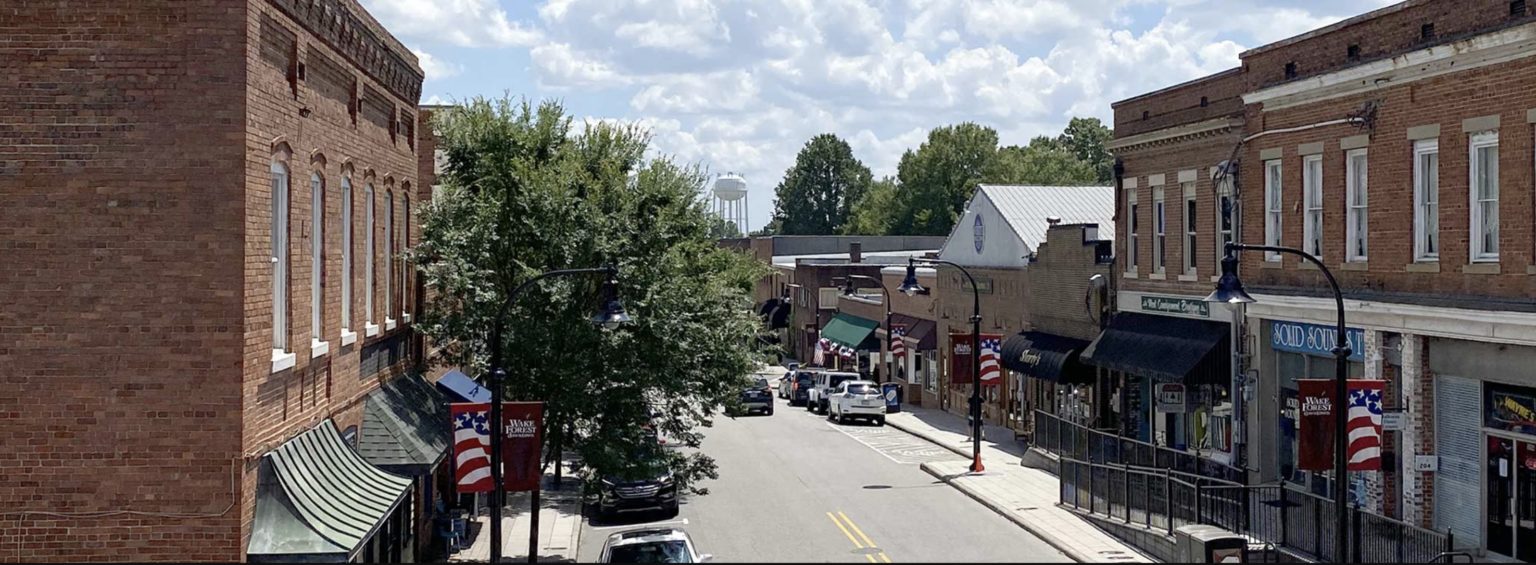
The Triangle has been adding houses for years and Wake Forest has taken a large share of them. Drive out along NC 98 or up toward Rolesville and Youngsville and there is a new slab going in somewhere most weeks. It is the reason this page exists, and it is also the reason we spend a lot of the rest of the year on houses that were built during the last growth wave.
That is the honest long view on a new build. The pipe decisions made in a trench this month are what somebody calls us about in fifteen or twenty years, when the house has changed hands twice and nobody remembers where anything runs. Homes plumbed carefully are quiet for decades. Homes plumbed to hit a date show up on our schedule early.
Take photos before the drywall goes up. Walk the rough-in with your phone out and shoot every wall. It is free, it takes ten minutes, and the next person who has to open that wall — possibly us — will be able to do it without guessing.
Before anything is priced, two questions matter more than the size of the house: where the water comes from, and what the house sits on.
Inside Wake Forest, water arrives from the municipal main through a meter at the property line, at a pressure the town sets. The house side starts at the meter, and pressure regulation and the main shutoff are part of what goes in at the underground stage.
Common once you head into Franklin County toward Youngsville, Franklinton and Louisburg. There is no meter and no main. The house is fed by a pump and a pressure tank, and those are part of the same rough-in rather than a separate project later.
They need a location, power and room to be serviced, and they set the pressure the whole house sees. We are a certified well contractor, so that side does not need a second company on the schedule. More on well pump services.
Most newer Wake Forest subdivisions are slab-built. The under-floor plumbing is cast into concrete, which is durable and quiet, and it means any future work under the floor is a serious undertaking rather than a crawl with a flashlight.
More common on older lots and larger acreage toward Franklin County. Everything under the floor stays reachable for the life of the house, which makes later repairs and additions dramatically cheaper, and makes moisture management worth planning for.
Slab or crawl, well or town, changes the underground stage, the inspection sequence, the material list and the access a future plumber will have. It is the first question on the phone for a reason.
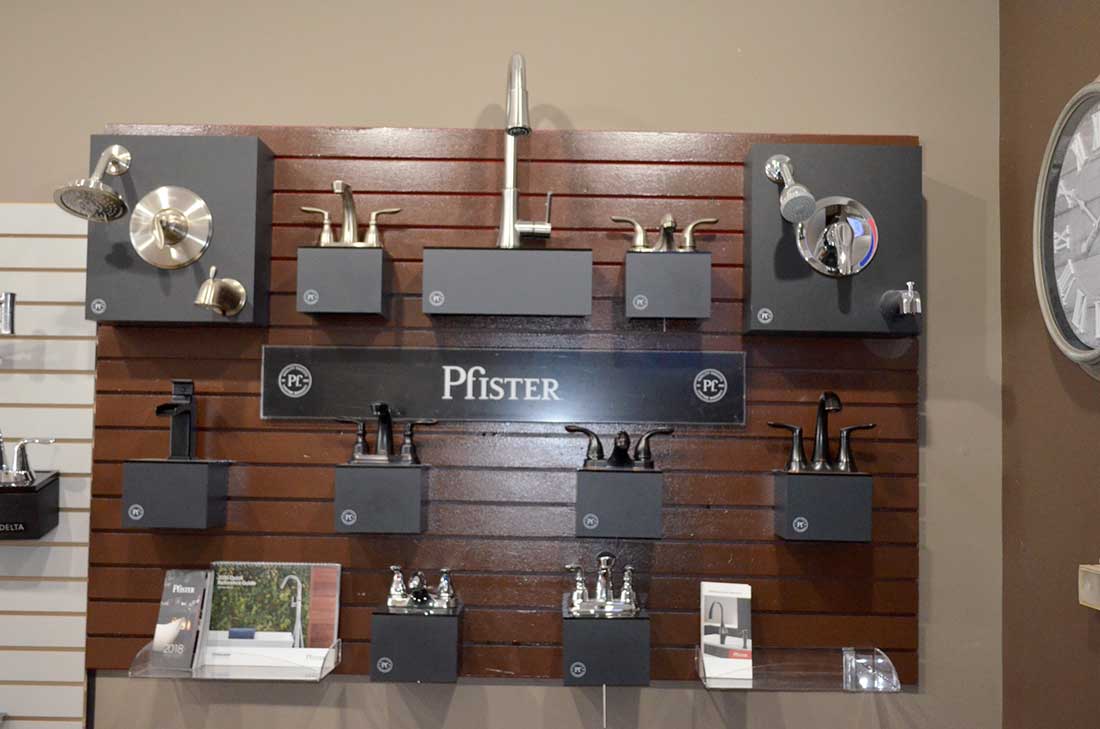
Fixture brands we install. Faucets and valves are a trim-out decision with a rough-in deadline.
Fixtures go on at trim-out, months after the rough-in, and that gap catches people out. A wall-mounted faucet, a freestanding tub filler, a body-spray shower system or an oversized soaking tub all need their rough-in set long before anybody is sitting down to pick finishes.
The practical rule is simple: anything that changes what is inside the wall has to be decided before the wall closes. Finish colour and handle style can wait. Valve type, mounting height and how many outlets a shower has cannot.
Bring us what you are considering while the house is still framed, even if it is only a screenshot and a model number. It takes a few minutes to check whether it changes the rough-in, and that few minutes is the difference between a choice and a change order.
New construction runs on sequence. A rough-in that slips pushes drywall, which pushes everything behind it. Being there when the schedule says is the whole job on a builder site.
Both trades run through the same walls, floors and crawl spaces at the same stage of a build. We are licensed for both, so a water heater location and the circuit that serves it are not two companies’ problems.
You are calling a shop on Park Avenue in Youngsville that works Wake Forest, Rolesville, Franklinton, Louisburg, Zebulon, Knightdale and north Raleigh.
A private well is normal work in Franklin County, not an exception we sub out. Certified well contractor, and the pump and tank go in as part of the same build.
We are members of the Franklin County Home Builders Association and PHCC of North Carolina, and we sponsor local schools and athletic programs. The town is where we live too.
The house that we plumb is the house we service. Offers like $50 off any plumbing repair and 10% off for veterans and active duty military are on the specials page, and the emergency line answers at (919) 316-0025.
White’s Plumbing & Electrical, LLC
730 Park Ave, Youngsville, NC 27596
Service and estimates: (919) 435-0736
24/7 emergency: (919) 316-0025
We cover Wake Forest daily, along with Youngsville, Rolesville, Franklinton, Louisburg, Zebulon, Knightdale and north Raleigh. Downtown Wake Forest is roughly a fifteen minute run down US 1 from the shop, and NC 98 and Forestville Road put the rest of town and the newer subdivisions within easy reach.
Send us the plans, or the address of the lot, and we will tell you what the house needs. The full plumbing services list is here.
Underground first, before the slab is poured or while the crawl space is still open. Top-out, also called rough-in, once the framing is up and the walls are still open. Trim-out at the end, when the fixtures go on and the water is turned over to you. Each stage is inspected before the next trade covers it up, which is why the order cannot be rushed.
Three main visits, tied to the rest of the schedule rather than to a calendar. We come out before the slab pour or before the crawl space is closed in, again once framing and roof are done, and once more at the finish stage. On most jobs the general contractor sets those dates and we work to them.
On a builder job the general contractor normally coordinates permits and calls in the inspections, and we work to that schedule. On an owner-built house that responsibility usually sits with you, or with whoever is acting as the general contractor. Either way we tell you what has to be inspected at each stage so nothing gets covered up early.
Before the rough-in, moving a shower or adding a sink is mostly a drawing change. After the rough-in the drain and vent lines are already set, and on a slab house they are buried in concrete. Layout changes are cheap early and expensive late, so that is the conversation to have before anything is run.
Yes. Plenty of Franklin County lots are on private wells rather than town water, and the well pump, the pressure tank and any treatment are part of the same rough-in. White's is a certified well contractor, so that side of the job does not need a second company.
It is worth deciding before the walls close, because a tankless unit changes the gas line sizing and the venting. Adding one later means opening finished walls to run what should have gone in at rough-in. We will go through the trade-offs against a standard tank while the house is still a drawing.
Yes. White's is a member of the Franklin County Home Builders Association and takes both builder work and one-off custom homes. What builders care about is showing up on the day the schedule says and leaving the work ready for the inspector, and that is how we run it.
It depends on the number of bathrooms and fixtures, the pipe material, whether the house sits on a slab or a crawl space, and whether the lot is on town water or a well. We price it from the plans rather than over the phone. Call (919) 435-0736 and we will go through what the house needs.
Send the plans or the lot address and we will tell you what the house needs, stage by stage.
White’s Plumbing & Electrical, LLC · 730 Park Ave, Youngsville, NC 27596 · 24/7 emergency (919) 316-0025